
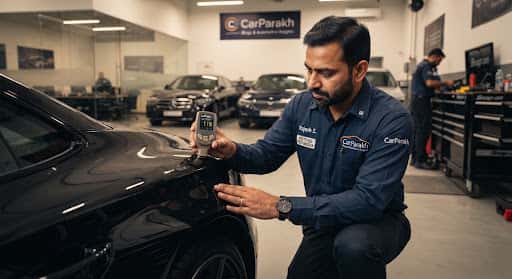
Buying a used car can save you a lot of money, but only if the car is as good as the seller says. A careful inspection before you pay is the single best way to avoid expensive surprises.
1. Check the documents first
Before looking at the car, match the paperwork. The chassis and engine numbers on the RC must match the numbers stamped on the car.
- Registration Certificate (RC) and valid insurance
- Service history and invoices
- Pollution Under Control (PUC) certificate
- NOC from the financier if the car was on loan
2. Look for signs of accident repair
Uneven panel gaps, mismatched paint shades and overspray on rubber seals are common signs of bodywork. A paint depth gauge confirms it: factory paint usually reads between 80 and 140 microns.
| Paint reading | What it usually means |
|---|---|
| 80–140 µm | Original factory paint |
| 150–250 µm | Panel repainted once |
| 250+ µm | Filler or heavy repair work |
3. Scan the electronics
An OBD-II scan shows stored fault codes that a cleared dashboard can hide, including airbag, ABS and engine faults.
Never rely only on the odometer. Compare it with the service records and the wear on the pedals and steering wheel.
Want an expert to do it for you?
A CarParakh inspector can run this full check at the seller's location. Book a used car inspection.
Frequently Asked Questions
Can I inspect the car at the seller’s location?expand_more
Yes. A CarParakh inspector can come to the seller’s home, a dealership or a parking lot.