
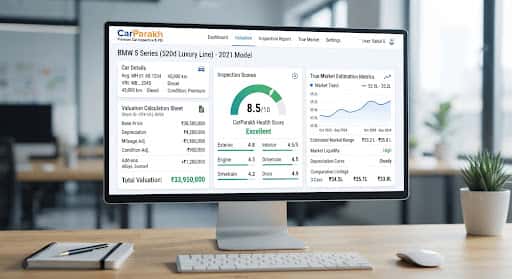
What is Car Inspection and Valuation
Car inspection records the physical and functional condition of the vehicle. Valuation uses relevant vehicle details and condition observations to help understand the vehicle present market position. The two parts are connected because condition, history, mileage, equipment, and maintenance can affect how a vehicle is assessed.
What is Included in Car Inspection and Valuation
Used Car Exterior Inspection
The exterior is checked for dents, scratches, paint variation, panel alignment, corrosion, damaged trim, glass, lights, mirrors, bumpers, and visible repair indicators.
Used Car Interior Inspection
Seats, upholstery, dashboard, infotainment, air conditioning, controls, windows, locks, cameras, sensors, carpets, and other accessible features are reviewed.
Used Car Engine Inspection
The engine area is checked for accessible signs of leakage, unusual conditions, damaged components, and other observations that may affect the overall condition assessment.
Mechanical and Tyre Inspection
Mechanical areas and tyres are reviewed for visible wear, damage, uneven tyre condition, tread, sidewall condition, wheel condition, and other accessible observations.
Car Scanning and Road Test
Where included, diagnostic scanning can identify stored fault information. A road test can provide observations about braking, steering, suspension, transmission, vibration, noise, and general driving response.
Used Car Inspection Checklist
The checklist records vehicle identity, mileage, exterior, interior, engine area, mechanical observations, tyres, wheels, electrical functions, diagnostic information, service history, and road-test observations.
How We Work
Vehicle Details and Inspection
The vehicle identifying information and available records are reviewed before the physical inspection. Findings are then recorded using the inspection checklist.
Condition Assessment
Observed condition, wear, equipment, repair indicators, and other relevant details are organized so they can be considered during valuation.
Valuation Information
The valuation assessment uses available vehicle details and condition information. It should be treated as an informed assessment rather than a fixed buying or selling price.
Report Preparation
The final report brings together inspection observations and relevant valuation information in a clear format.
Why Choose Carparakh for Car Inspection and Valuation
Keeping inspection findings and valuation information together makes it easier to understand how the vehicle observed condition relates to its overall assessment.
How to Get Your Car Inspection and Valuation Done
Provide the vehicle location, registration or VIN details where available, mileage, and inspection requirement. The vehicle is inspected and relevant findings are documented before valuation information is prepared.
Car Inspection and Valuation Report
The report can include vehicle details, photographs, condition findings, service history observations, scanning information where available, road-test notes, and valuation-related information.
FAQs
Does valuation depend on vehicle condition?
add
Yes. Condition, age, mileage, service history, equipment, repair history, and other relevant information can affect an assessment.
Is the valuation a guaranteed selling price?
add
No. A valuation is an assessment based on available information and should not be treated as a guaranteed final transaction price.